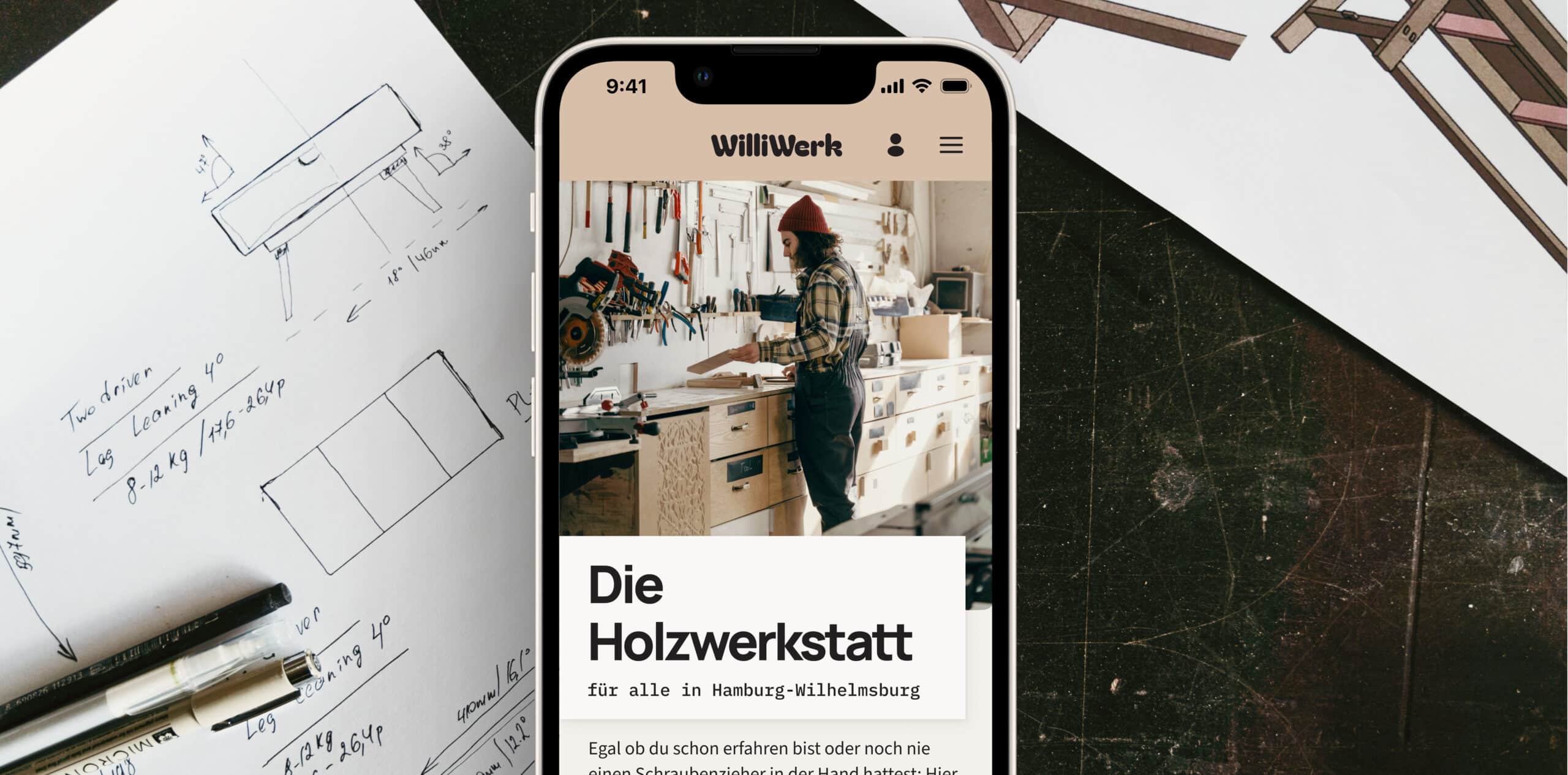
Reducing Entry Barriers to Community Workshops
Year
2026
Time scope
3.5 months
Key Skills
UX Research
Wireframing
Prototyping
Usability Testing
Tools
Figma
Adobe Photoshop
ChatGPT, Claude & Gemini
Leonardo AI
Role
Product Designer (UX/UI) – Solo project, bootcamp capstone
About
WilliWerk is a product design project exploring how to make community workshops more accessible for first-time users. The starting point was a real initiative: as part of a collaborative housing project in Hamburg-Wilhelmsburg, an open woodworking workshop is being developed for both the building community and the local neighborhood.
The project focused on how digital experiences can reduce hesitation, create orientation, and guide new users confidently through their first steps.
Core question: How do people find the confidence to visit for the first time?
The goal was to design for the moment before the first visit – when uncertainty prevents many people from getting started at all.
Problem Statement
Community workshops provide space for repair, collaborative learning, and neighborhood connection. They also contribute to a more sustainable use of resources. However, their potential often remains underused because many people never take the first step.
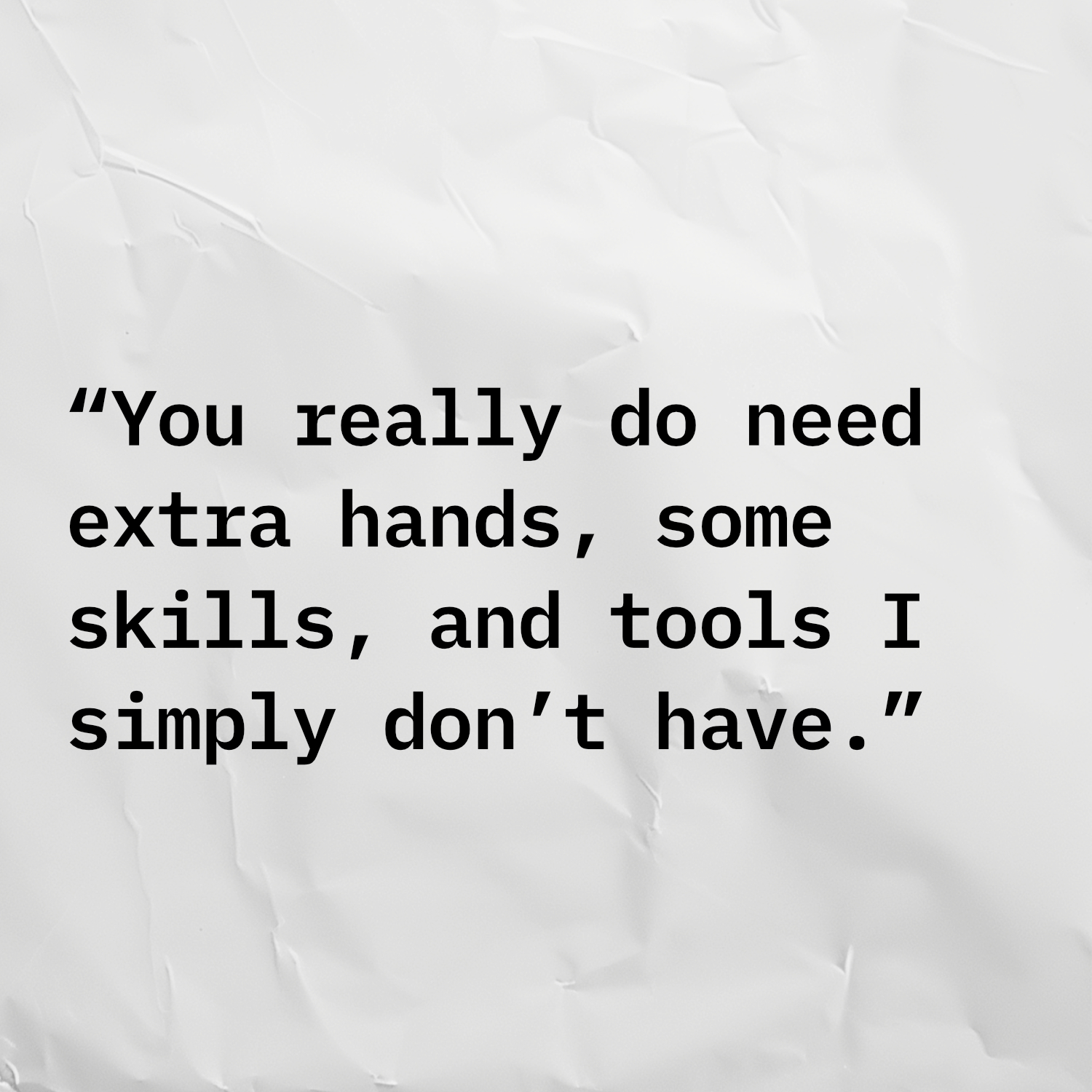
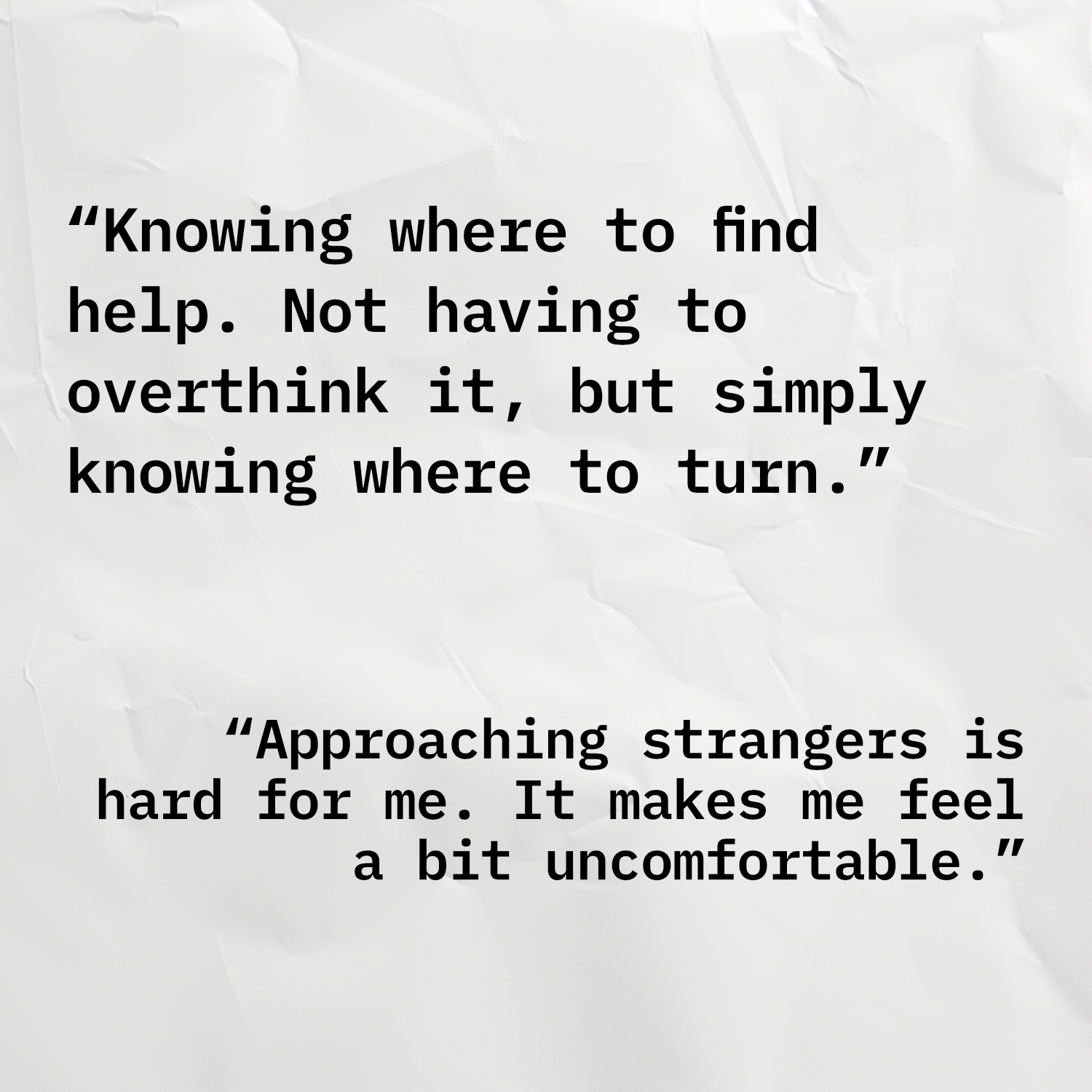
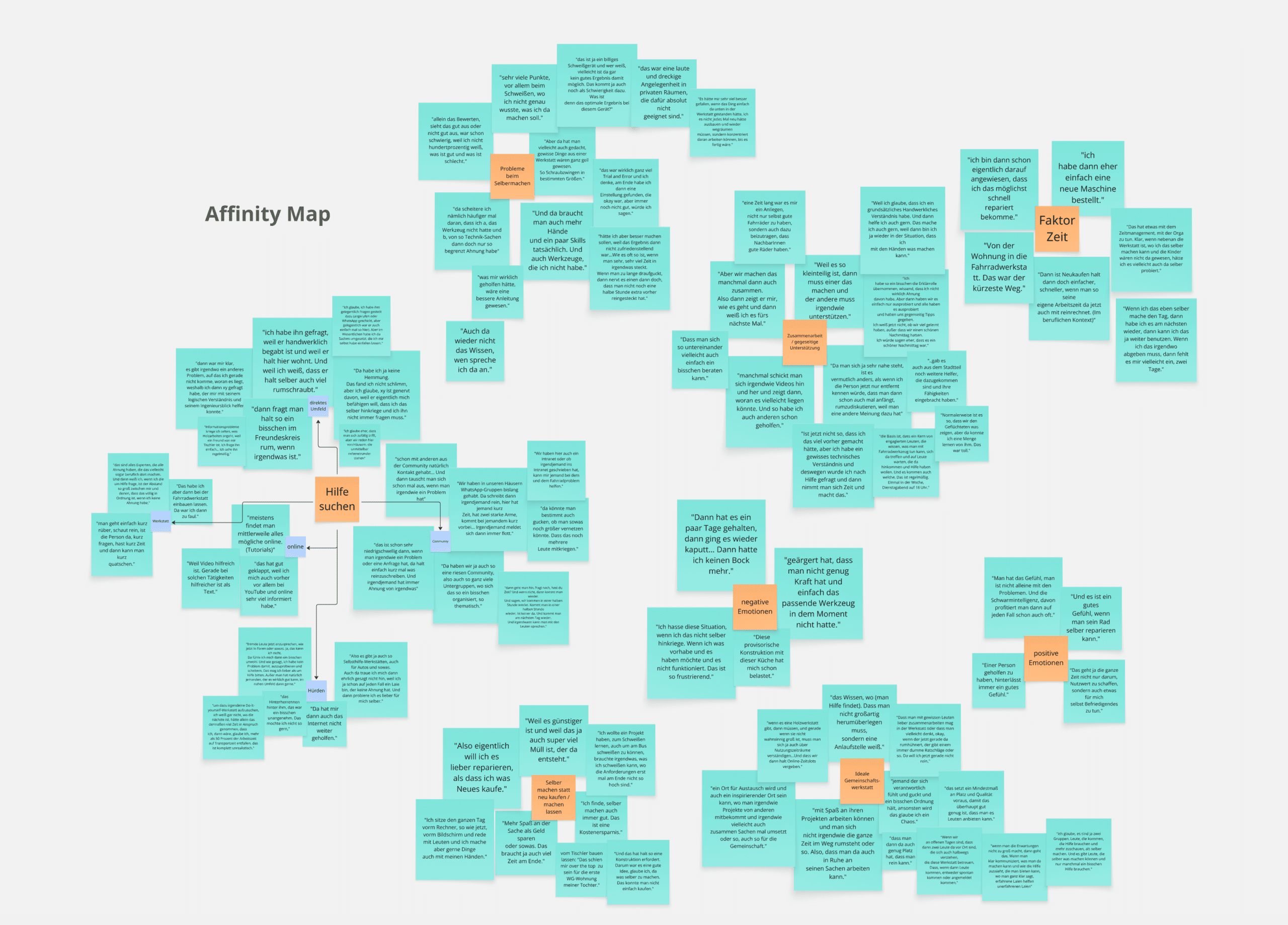
My research showed that interest in DIY is there, but beginners in particular often do not get started. They lack experience with tools and machines. At the same time, asking strangers for help feels difficult, especially when it is unclear who is approachable.
Key barriers:
• Lack of orientation: People do not know how to get started.
• Invisible expertise: Help often depends on personal networks. If you do not know anyone, you are left out.
• Social hesitation: Asking strangers for help feels intimidating.
Research Insights
73%
of the people I surveyed enjoy DIY projects and making things by hand.
For many, the biggest motivation lies in bringing their own ideas to life and in the feeling of having created something themselves. For many, hands-on work also serves as a valuable counterbalance to digital screen-based work.
60 %
said they wanted an open environment where questions can be asked without judgment.
At the same time, collaborative making was seen as an important support for learning.
Persona & Design Question
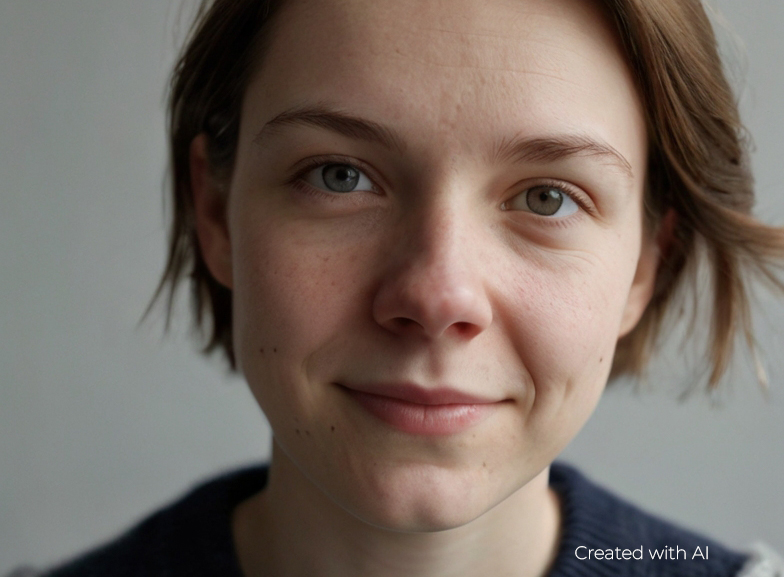
Luca, 32, from Hamburg-Wilhelmsburg
The hesitant beginner
Luca is interested in DIY and repairs but has little hands-on experience. She prefers to research digitally first, observe before asking questions, and seeks help more easily from people she already knows. She learns best through hands-on collaboration.
Pain Points:
- Unsure how to get started
- Hesitant to ask strangers for help
- Lacks orientation around tools and workshop processes
Needs:
- Clear orientation and entry points
- Visible people to approach for support
- Open, collaborative learning without pressure to perform
How might we help Luca feel confident and welcome when entering a workshop environment – both technically and socially?
Solution
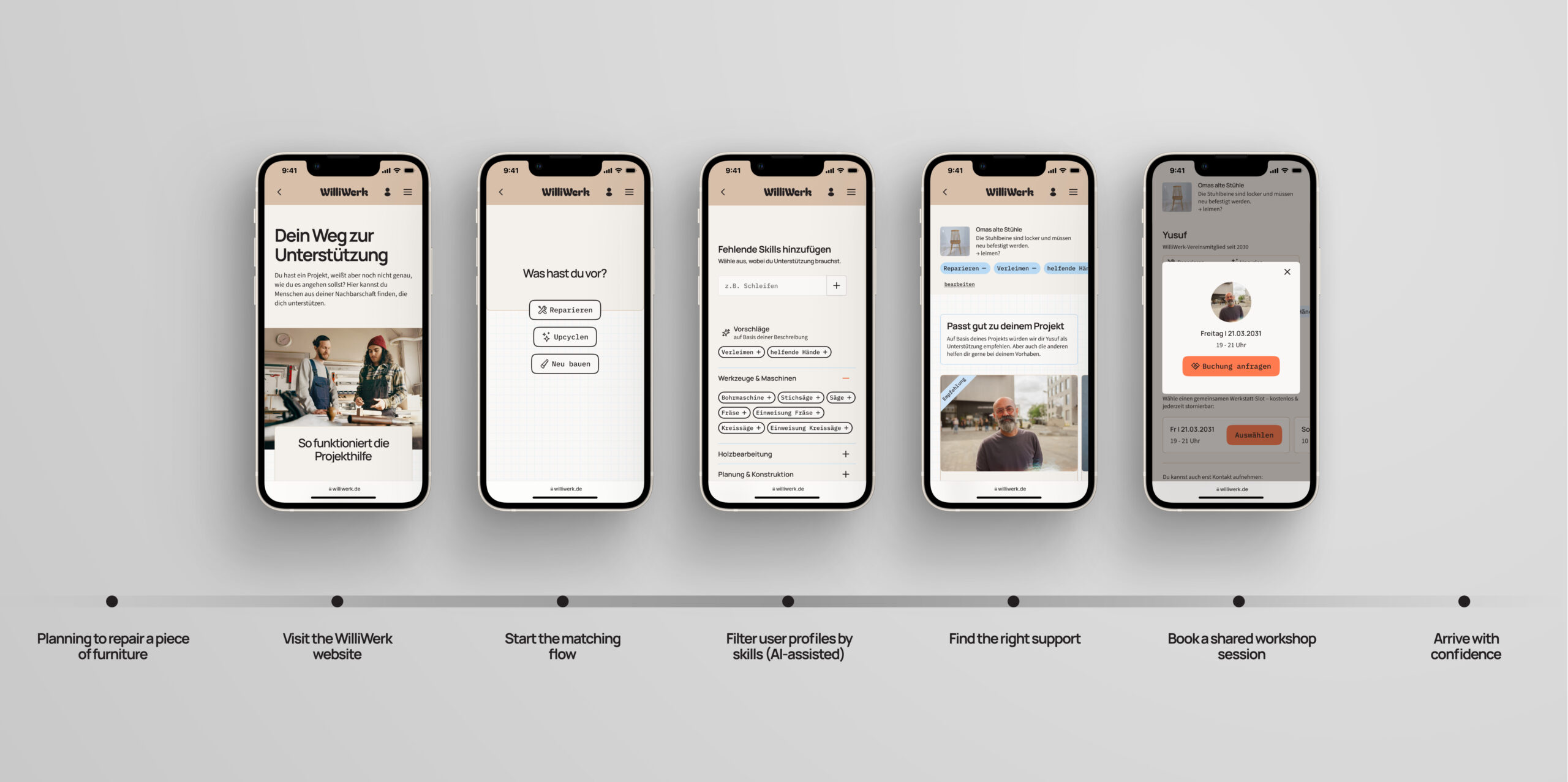
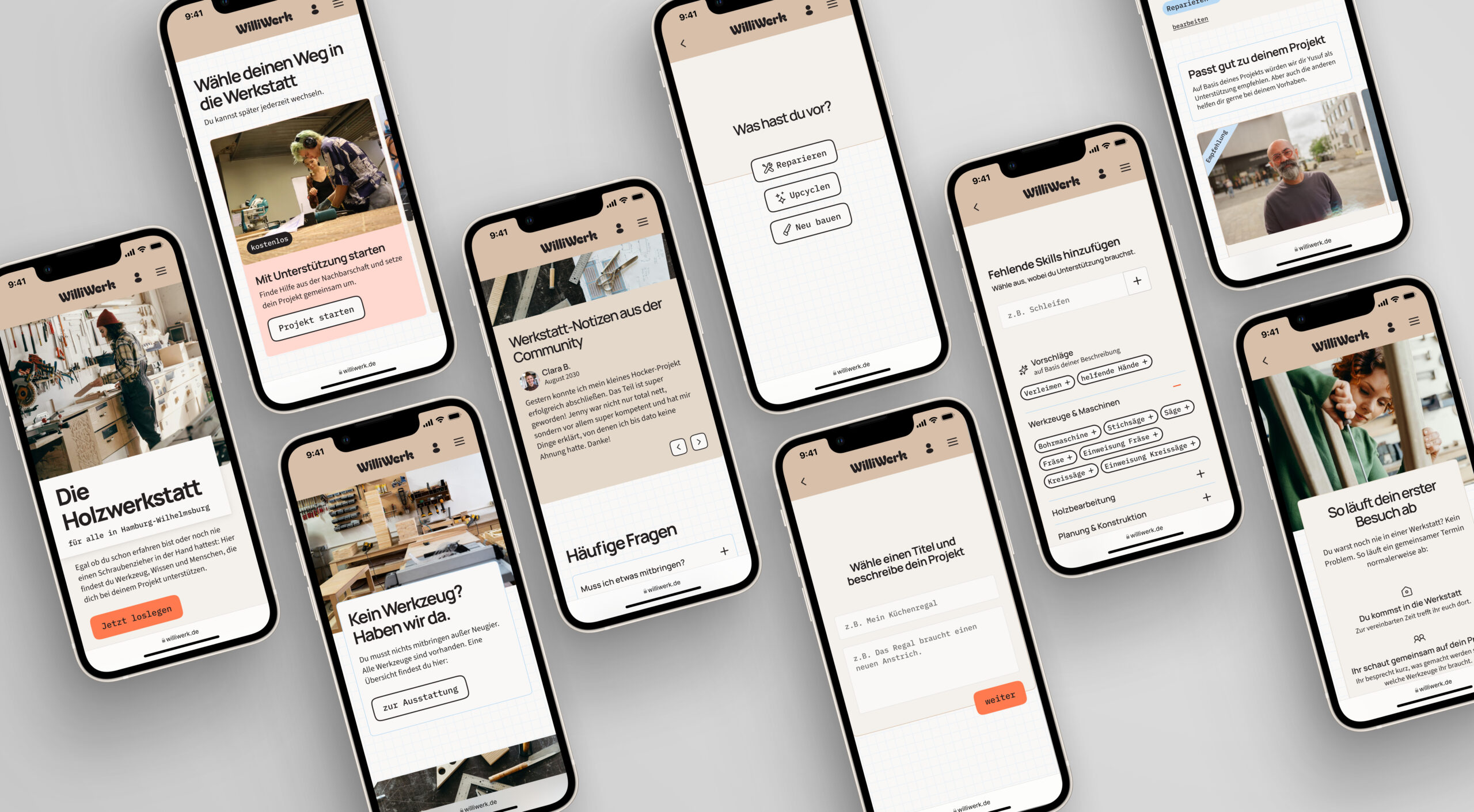
A digital feature integrated into the workshop website: filterable profiles of workshop members who offer support.
Users describe their project and receive relevant suggestions of people who can help and are active in the workshop. From there, they can either request a session directly or start with a message first.en.
Why this solution?
Compared to a buddy system, this approach works more like a broader support network: users can choose who they want to approach and access the knowledge of many people instead of relying on just one.
Unlike physical notice boards inside the workshop, the digital solution works before the first visit, exactly when hesitation is highest and many people decide not to come at all.
Design Strategy
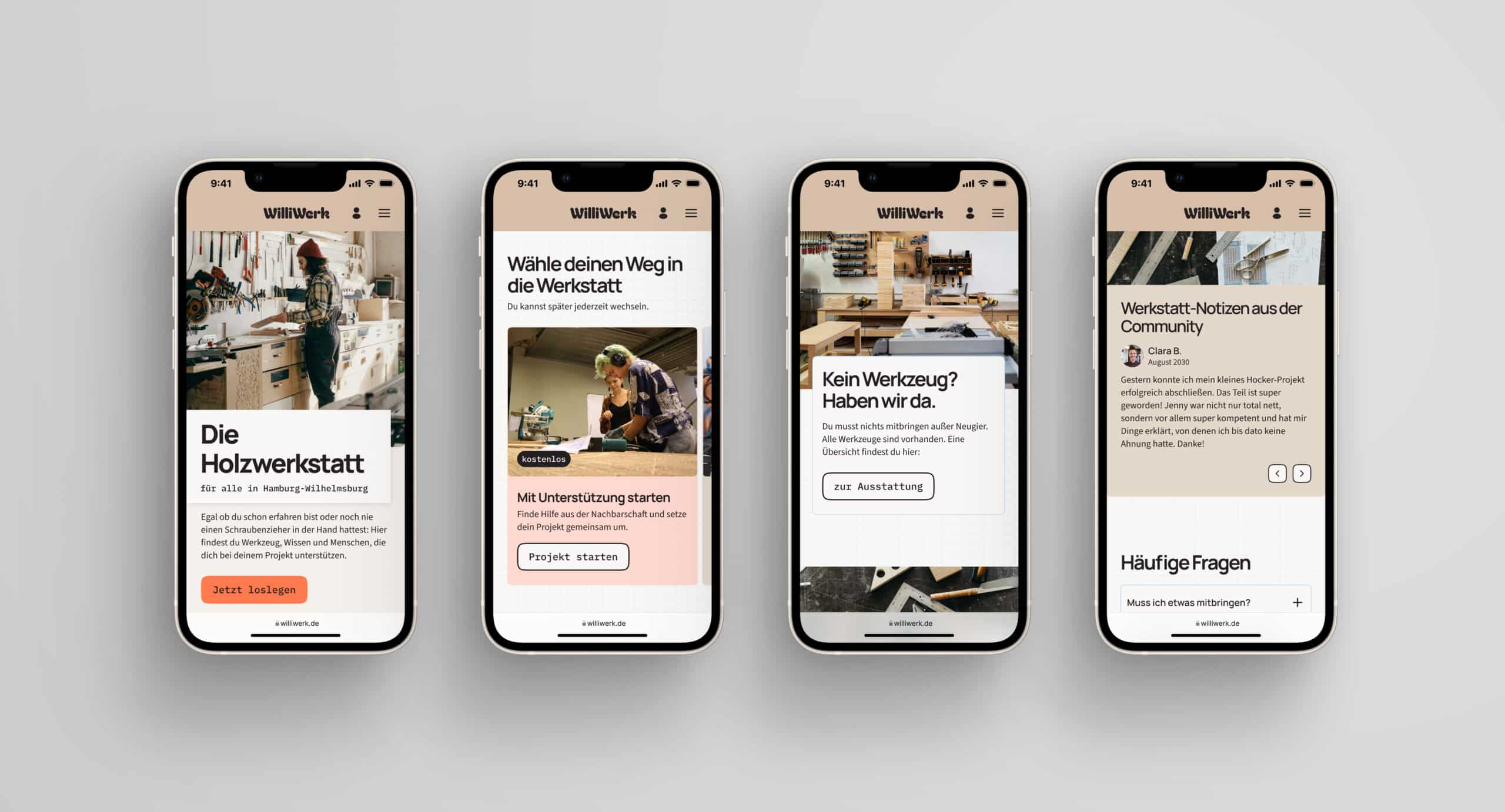
Orientation before the first step
Clear entry points help users understand which path into the workshop fits their needs.
Trust through tone and visual design
A warm, non-commercial tone reduces hesitation and reinforces a sense of safety.
Bridging the digital and physical experience
After booking, the flow prepares users for their first in-person visit.
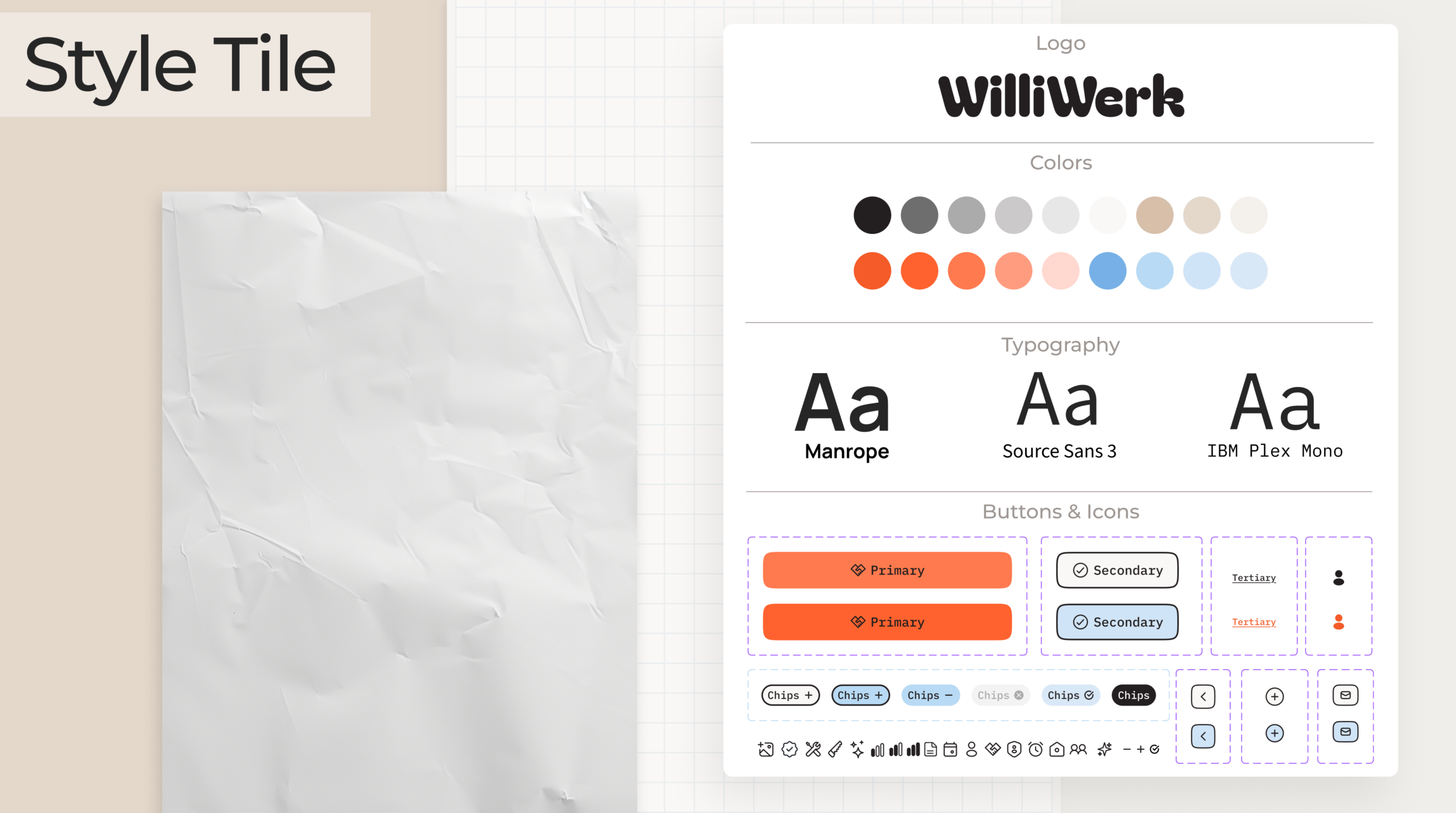
Design System
The visual system was designed to feel warm, calm, and trustworthy – making the workshop feel like an inviting community space.
Clarity and orientation
Recurring UI elements such as a warm orange-red primary button, understated secondary buttons, and consistent input fields help reduce cognitive load.
Friendly, with a technical and hands-on character
A soft, rounded logo typeface is combined with selectively used monospace accents.
Bridging the physical workshop world
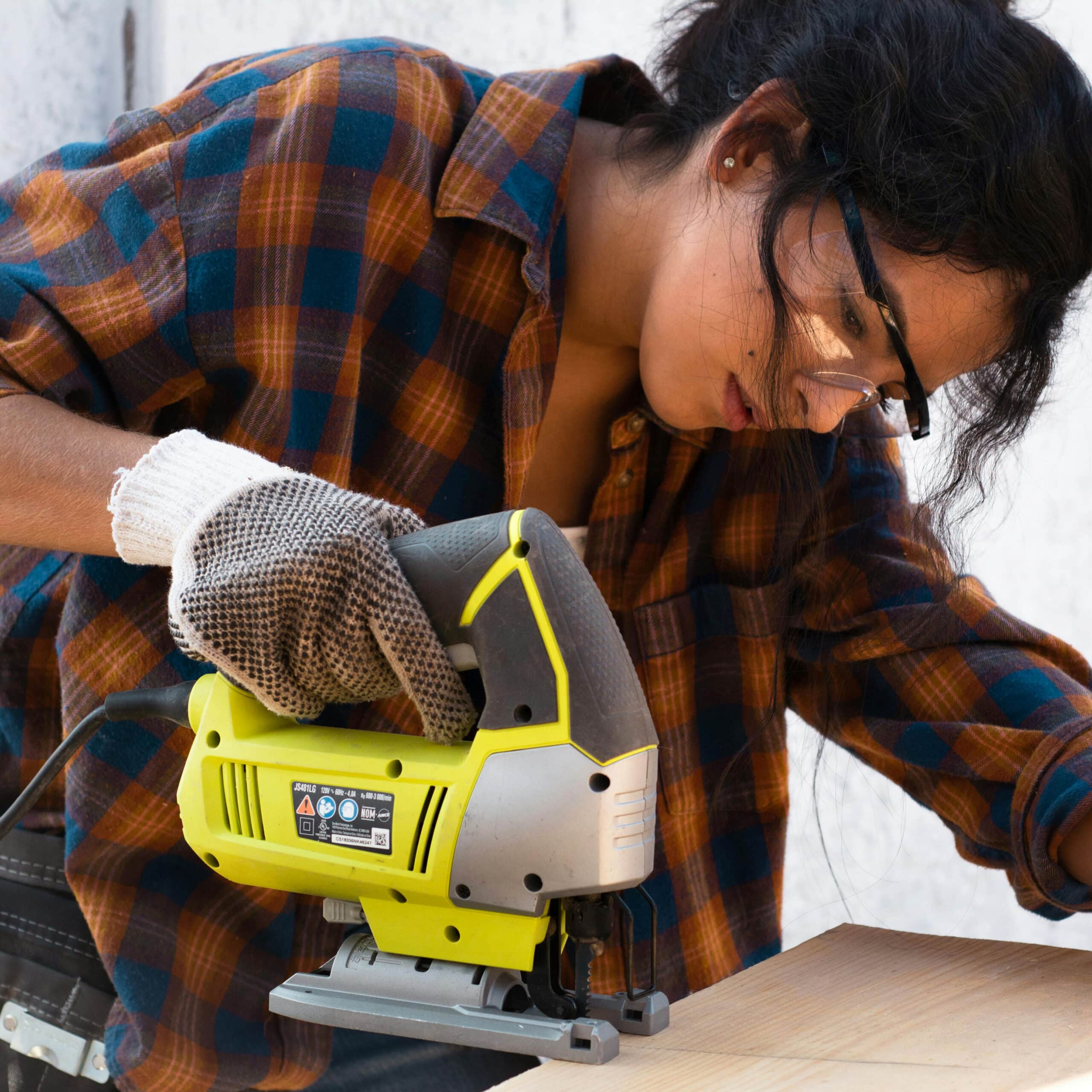
Warm colors, workshop imagery, and wood- or paper-like surfaces give the product a more individual and tactile feel.
Testing & Iteration
Does Luca feel confident enough to book a shared workshop session?
Hypothesis:
If users complete the matching flow, they will feel confident enough to book a session.
In usability testing, the matching flow itself was perceived as intuitive and helpful. However, the biggest barriers appeared before and around it: entering the flow, choosing the right support, and transitioning into the real workshop environment.
Key findings:
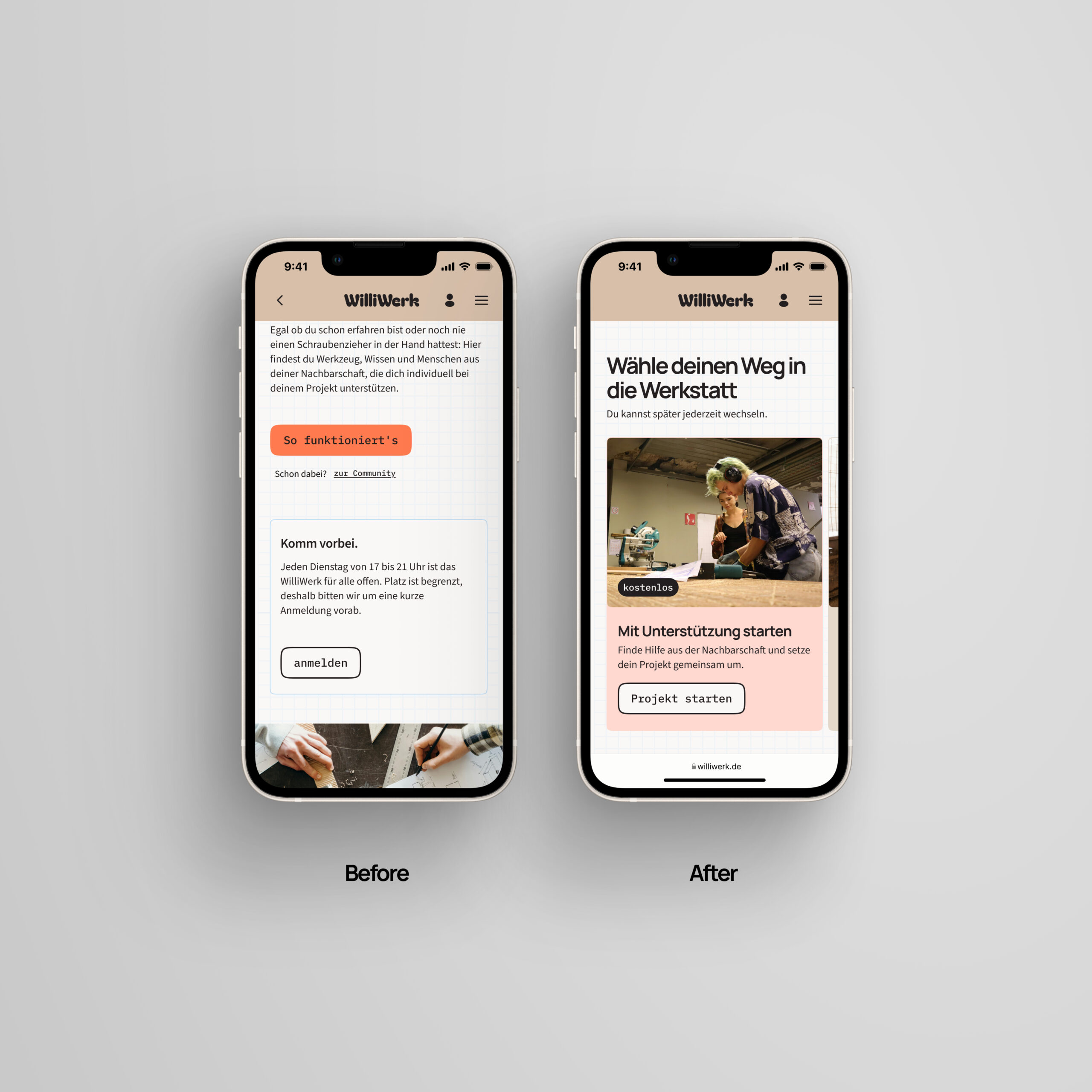
- Users needed clearer orientation on the landing page
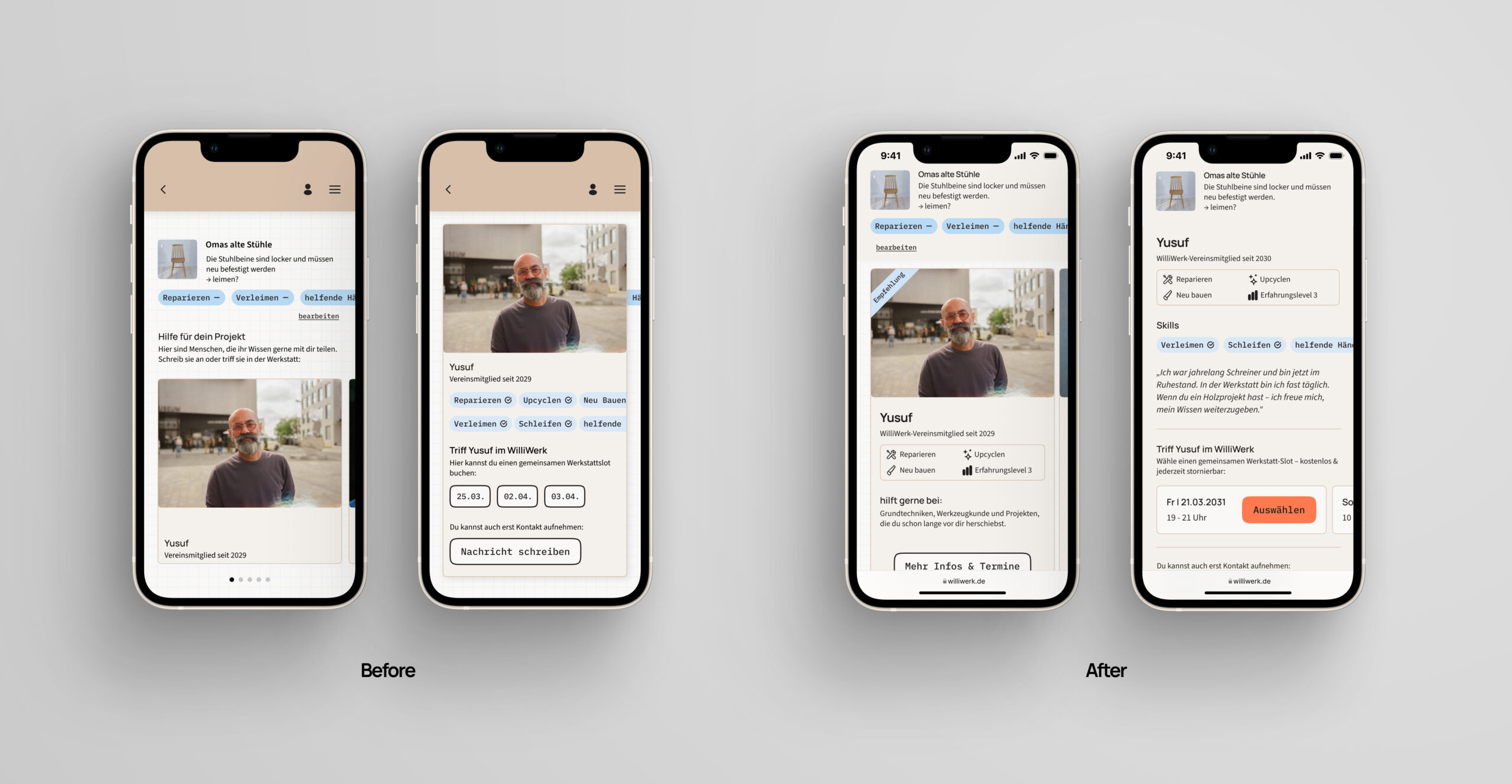
- Choosing a helper sometimes created decision pressure
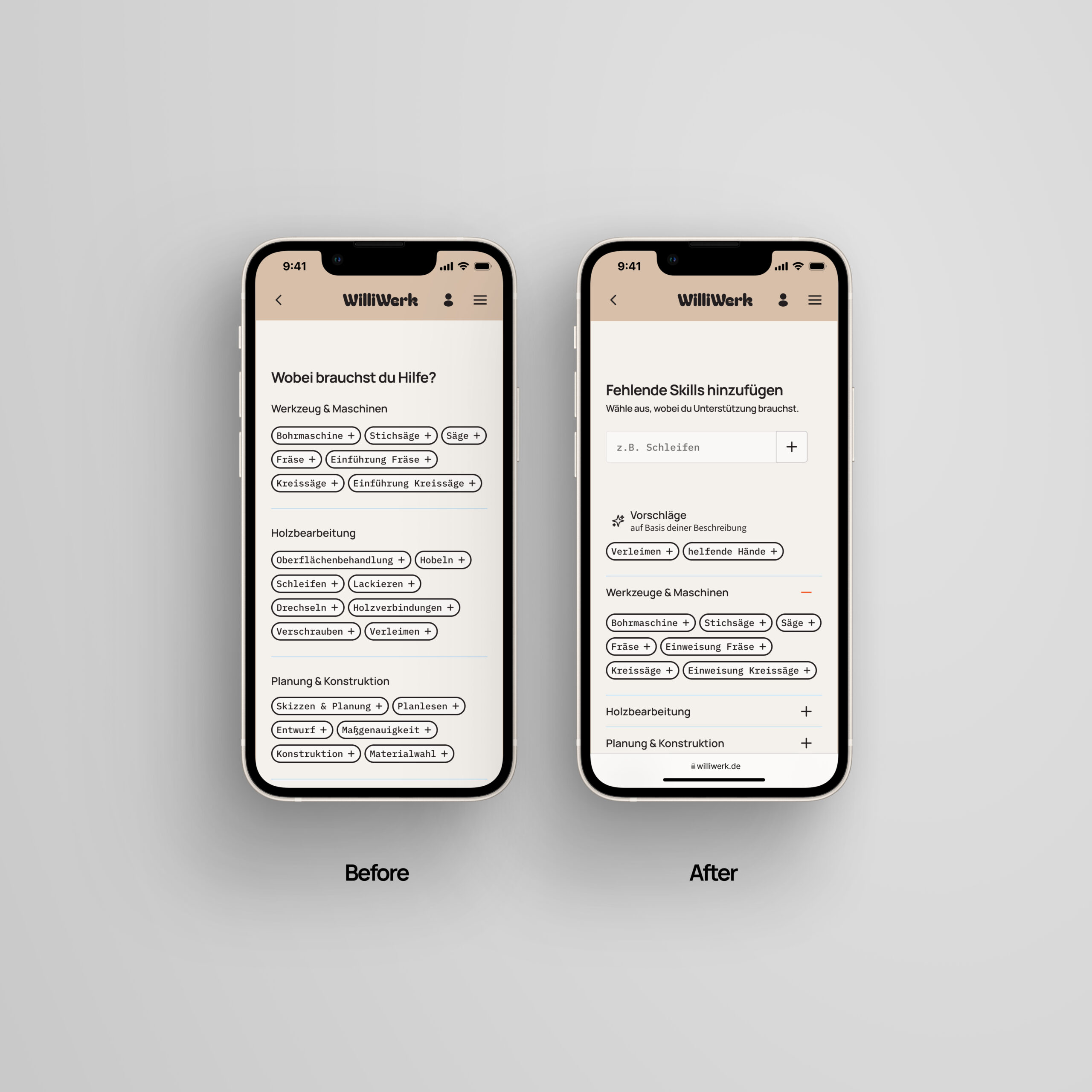
- Inexperienced users often struggled to identify which skills their project actually required
This led to three key improvements:
- Three clear entry points on the landing page for different user needs
- Refined helper profiles with recommendations, relevant context, and visible availability
- AI-assisted skill suggestions based on the project description to reduce uncertainty in self-assessment
Before → After:
The design evolved from a functional matching flow into a more understandable end-to-end entry experience with clearer orientation, easier decision-making, and lower drop-off potential.
Success Metrics
Two key KPIs:
1) Matching Start Conversion Rate
Is the matching feature trustworthy, understandable, and relevant enough to be used?
Metric: Percentage of visitors who land on the homepage and begin the matching process
Target: 25-30 %
The goal is for at least 25% of homepage visitors to create an account within the matching flow in order to start a project with support.
2) Booking Conversion
Does profile exploration lead to actual workshop visits?
Metric: Percentage of started matchings that result in a booked appointment
Target: 40-60 %
The goal is for at least half of all matched projects to lead to a confirmed workshop appointment. New users are potential future community members.
Market Context
Many community workshops still rely on minimal digital infrastructure, often without dedicated onboarding support or a focus on human connection.
Design principle
The solution should feel like supportive infrastructure – not like a commercial product.
AI in the Design Process
I used AI intentionally to speed up research, writing, and selected design tasks. Final interpretation, prioritization, and design decisions were made by me.
AI in the product concept
AI-assisted skill suggestions based on the user’s project description to reduce uncertainty around missing skills
Leonardo AI
Generating persona images
Claude, Gemini & ChatGPT
- Support in reviewing interview notes, research findings, and studies on community workshops
- Generating variations for microcopy, onboarding text, and tone of voice in the prototype
Learnings & Next Steps
Key takeaway:
The most critical moment happens before the actual matching flow. In this project, trust was a core part of the UX.
The project also showed that not only social hesitation, but also uncertainty about one’s own knowledge gaps can lead to drop-off.
With more time, I would pilot the concept in a real workshop setting and test it over a longer period.